

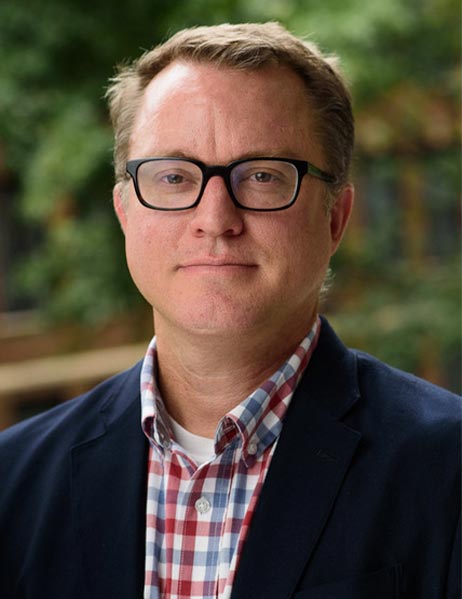
Henry Webb
Henry Webb is Professor of Business and Legal Studies at Palm Beach Atlantic University in West Palm Beach. He earned a B.B.A. from the University of Mississippi in 1993, a J.D. from the Lewis & Clark Law School in 1996, and an M.B.A. from the University of Georgia in 2001. Professor Webb practiced environmental law for law firms in Seattle and Atlanta for nearly ten years before joining academia on a full-time basis in 2008. He taught at a university in Ho Chi Minh City, Vietnam, for three years, and at a law school in Doha, Qatar, for three years, before moving back to the United States in 2014. He has also taught as a visiting professor at universities and law schools in Vietnam, Hungary, Indonesia, and Bhutan, where he taught on a Fulbright grant in 2023. Professor Webb’s research focuses primarily on the intersection of the law, technology, and the environment, the enforcement of individual property rights, and governmental transparency and accountability. He has published numerous articles in peer-reviewed journals and law reviews.
INCLUDE
How Uber Has Caused Major Changes To Transportation, The Law, And Society
Please join attorney and law professor Henry Webb for an interactive, one-hour discussion of the impact Uber has made since its inception in 2009. We’ll discuss how Uber has changed the transportation industry, the law, and society — and what the future holds as self-driving cars become more of a reality.
Legal Analysis For Non-Lawyers
Please join attorney and law professor Henry Webb for an interactive, one-hour discussion of the “IRAC” method of legal analysis. IRAC, which stands for Issue, Rule, Application, Conclusion, is the method most lawyers use to analyze complicated legal issues. Using a hypothetical fact pattern involving a client charged with a crime, Professor Webb will demonstrate how to use the IRAC method, including the application of a criminal statute and relevant case law, to determine the likely outcome of the client’s case. Together with Professor Webb, you will then use the IRAC method to analyze a significant case that is currently in the news. If you’ve ever been curious about how lawyers analyze cases in the real world, this will be an informative and entertaining discussion for you.
Living And Working Abroad: Cultural Challenges And Opportunities
Please join attorney and law professor Henry Webb for an interactive, one-hour discussion of Professor Webb’s experiences living and working abroad. Professor Webb spent four years teaching business law in Vietnam, and three years teaching legal research and writing in Qatar. He has also taught as a visiting professor for universities in Vietnam, Hungary, and Indonesia, and he recently taught on a Fulbright grant at a law school in the remote, Himalayan country of Bhutan. Accompanied by a slideshow containing numerous photographs from his time living and working abroad, Professor Webb will discuss the challenges of living in completely different cultures, but also the many life-enriching experiences he had while living abroad (including getting married and his son being born in Vietnam).
The People vs. O.J. Simpson
Please join attorney and law professor Henry Webb for an interactive, one-hour discussion of two legal cases involving former football great O.J. Simpson: the criminal prosecution of Simpson for the murders of his ex-wife, Nicole Brown Simpson, and her friend, Ronald Goldman, and the wrongful death lawsuit filed against Simpson by their families. If you’ve ever wondered how Simpson was found not guilty of double homicide in the criminal trial, but legally responsible for their wrongful deaths in the civil trial, this lecture is for you.
What Happens When Your Client Is The Bad Guy?
Please join attorney and law professor Henry Webb for an interactive, one-hour discussion of one of the most interesting cases Professor Webb worked on during his nearly ten years in private practice as an environmental attorney. Professor Webb will describe how, after spending two years representing a client in a case with over $6 million in dispute, he discovered that his own client had committed a serious crime in connection with the case – forcing Professor Webb and his law firm to withdraw as counsel on the eve of trial. The way the story unfolds, and especially the aftermath, will surprise you.
Spotlight On Current Events Lecture Series
Beginning in August 2025, Professor Henry Webb will be offering residential communities in the South Florida area the opportunity for a regular, discussion-based lecture series on important current events and news stories that are currently trending in the United States. Professor Webb is currently a Professor of Business and Legal Studies at Palm Beach Atlantic University in West Palm Beach, Florida. He has been an attorney since 1996, and has been a law professor since 2008.
Drawing on Professor Webb’s nearly 30 years as an attorney, and more than 15 years in the classroom as a law professor, each of Professor Webb’s one-hour lectures will facilitate an engaging and thought-provoking discussion of three or four events and stories from the national headlines. If time permits, Professor Webb will also prompt attendees to discuss other events and stories they have an interest in.
Professor Webb’s lectures are intended to encourage attendees to stay up to date on important current events and stories affecting our society, to think critically about societal issues, and to engage in stimulating discussions that will help attendees keep their minds sharp and actively engaged.
Professor Webb will avoid events and stories that are overly political or sensitive, and he will use the skills he has developed in the classroom as a law professor to defuse or move on from discussions that do become overly emotional or contentious.
Professor Webb will speak at participating residential communities once every two months, excluding the months of June and July each year, for a total of five lectures per year. Each of his presentations will be accompanied by a professional deck of slides. He will bring his own laptop, but he will require an HDMI cable to connect his laptop to a projector or monitor and an outlet in which to plug in his laptop. The fee for each lecture is $250.
The Murder Of FSU Law Professor Dan Markel
In July 2014, Florida State University law professor Dan Markel was shot to death after pulling into his Tallahassee garage. With no idea who might have killed Professor Markel, the police immediately began two separate investigations: (1) an investigation into who the shooters were based on security camera footage, cell phone records, and Florida Sunpass toll road records; and (2) an investigation into who might have had a motive to murder Professor Markel. In a dramatic, one-hour presentation, law professor Henry Webb will describe how both of those investigations eventually led police to the same suspects: the wealthy Miami family of Dan Markel’s ex-wife, Wendi Adelson, who at that time was going through a bitter custody battle with Professor Markel. South Florida ties, hitmen, wiretaps, last-minute arrests of suspects attempting to board flights to non-extradition countries – this story has it all.
DNA Detectives: The Rise Of Investigative Genetic Genealogy (“IGG”)
Join law professor Henry Webb for an interactive, one-hour presentation on investigative genetic genealogy (“IGG”), a law-enforcement technique that uses DNA from crime-scene evidence to identify potential suspects by comparing it to profiles in public genealogy databases, finding distant relatives, and building family trees to trace the source of the DNA. Beginning with a discussion of Barbara Rae-Venter’s interesting book, I Know Who You Are, which chronicles how IGG identified the man later arrested as the Golden State Killer, Professor Webb will then explain how IGG was also instrumental in solving the recent case involving the murder of four University of Idaho college students by Bryan Kohberger. Professor Webb will demystify how IGG actually works, explain why it succeeds where traditional methods stall, and discuss the key legal and ethical questions it raises. including Fourth Amendment, database consent, chain-of-custody, and courtroom admissibility issues.