
John Leisenring
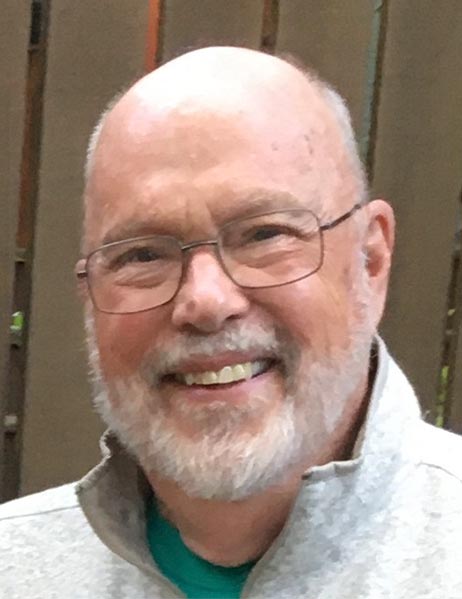
Dr. John Leisenring is a long-time teacher and professional musician, having taught music for forty years, and performed as a trombonist for almost seventy years. John taught at the University of Texas-Austin, and the University of Missouri-Kansas City.
He has performed for some 20 years with the KC Opera Orchestra, the KC Ballet Orchestra, and as a jazz musician in some 20 states and nine foreign countries, including jazz festivals in Sydney, Melbourne, Berlin, Montreux, and Newport (twice!). John’s University teaching involved, among other coursework, classes in the History and Development of American Music, Jazz and Rock ‘n’ Roll.
INCLUDE
The Beatles
The Beatles arrival in America in 1964 marked the end of rock’s first era and announced the arrival of a new generation of rock music and rock fans. It’s a miracle that talents as enormous as these found each other and produced such a remarkable catalog of music in just seven short years.
This course, in three sessions, examines both the musicians and the three distinct periods of their work together. Lots of music and even a few videos will emphasize each. Throughout we’ll marvel at how their music – from “She Loves You” to “Let It Be” – became a metaphor for the ’60s. Or were the ’60s a metaphor for the Beatles?
The Early Period – 1963-1964
This lecture looks at The Beatles’ early original songs and how they updated pop/rock, all in a noisy and exuberant wall of sound with a new spirit of commitment and FUN! Featuring “Beatles For Sale” (“Beatles 65” in America) through “A Hard Day’s Night,” and the chord that changed…EVERYTHING!!
The Middle Period – 1965-1967
Now The Beatles are expanding styles, techniques, and ranges of expression, through folk and Dylan influenced self-expression, to psychedelia and “Rock as Art”? This lectures also discusses the end of touring and the widening role of George Martin. Featuring “Help” through “Sgt. Pepper’s Lonely Hearts Club Band.”
The Final Period – 1968-1969
The band returns to its roots, looks back and sums up all that came before. The Beatles become four individuals moving in different directions. Featuring the “White Album” – a sprawling, brilliant summation of musical styles and a preview of the ’70s, through “Abby Road” – a slick, professional final bow.
Other Lectures
New Orleans Jazz Funerals And The Roots Of American Music
As the happy music of the brass band fades into the streets of the French Quarter, with the dancing feet of the second line following, we’ll examine how the music of the New Orleans Jazz Funerals represent a microcosm of the roots of American Music. Through the beginnings of Ragtime, the Blues, and on to the wonderful music played by Louis Armstrong, the amalgam of European and African music that is OUR music will be explored and discussed. And always remember – – “To Meditate Is To Dance!”
Just what IS Kansas City Jazz??
18th and Vine Street wasn’t just an intersection in the black district of Kansas City. It was the center of musical activity in the 20s and 30s, which led to a major reworking of what had become known as American Music.
KC was a stopover for traveling bands, and the openness of the Pendergast Era provided an environment for growth for hundreds of musicians. From the Pla-Mor Ballroom with Andy Kirk and the Twelve Clouds of Joy through the Reno Club with Count Basie and Lester Young, American Music grew up to become the Art Music of the 40s and beyond.
Enjoy lots of musical examples, and lots of good Kansas City stories and legends.
The BIG BANG Of American Music: Dance Music Becomes Art Music, And Rhythm ‘N’ Blues Becomes Rock ‘N’ Roll.
Pianist John Lewis once said, “We got tired of being entertainers, and became the artists we knew ourselves to be.” Dizzy Gillespie and Charlie Parker and their fellow musicians of the “BeBop” school emerge in the 1940s, and advance American Music into an art music,
Dancers love of Rhythm and Blues led to the emergence of Rock ‘n’ Roll in the 1950s. Black musicians dominate, but soon Sun Records, in Memphis, begins to record the “million-dollar quartet,” led by Elvis Presley, Jerry Lee Lewis and others. Rock and Roll gains wide acceptance beyond the African-American diaspora.
Enjoy lots of musical examples and vintage photographs. As Yogi Berra once may have said: “When you come to a fork in the road – take it.”
The Blues As A Healing Art
I’m goin’ up north where they say,
money grows on trees.
I don’t give a doggone if ma black soul leaves
COW COW DAVENPORT
Back to the sun-drenched cotton fields, where slaves communicated with each other or vented their feelings in formless and sometimes wordless cries, calls, field hollers, and arhoolies . . . .
Back to the railroad gangs, roustabouts, turpentine camps, and prison chain gangs where the call-and-response of worksongs and the percussive rhythms of hammers, axes, and tampers energized and “lightened” work . . . .
Back to the churches where spirituals served as overt expressions of religious fervor and covert songs of protest and freedom . . .
And on and on. The African-American diaspora was and is alive and well in the countless forms and formats of the Blues. All of these sounds and rhythms figure in the development of Rhythm ‘n’ Blues (and later Rock ‘n’ Roll).
A Brief Look At How Jazz Musicians Improvise
The old musician joke – How do you get to Carnegie Hall? Practice a lot. But practice what? If one wants to improvise – to play “by ear” – one needs to know the basic musical language and learn one’s “scales and arpeggios.”
Watch, and listen, to how to begin to improvise on the simplest of Blues harmonies. Learn basic musical language and apply it to the form and harmonic structure of the Blues.
This lecture must have a piano in the room – either electric or acoustic.
Lots of fun for instrumentalists and singers alike. And all can learn to hear more as listeners at concerts where jazz is being performed.
“California Dreamin’” Through “Sugar Magnolia”: California And Psychedelia In The 1960s
A new musical center (San Francisco) and aesthetic emerges in American pop music, flying in the face of music business conventions and signaling the advent of a new vision of youth culture (“counter-culture”) and a new era for rock music.
From Mama Cass through Jimi Hendrix, Grace Slick and Jerry Garcia, California was a microcosm of the tumultuous decade of the 1960s.
This course, in four 1 ½ hour lectures, will examine the cultural expansions, listen to the music, and re-create the decade which reacted in so many ways against the United States of the 1950s and before.